Application
Depending on where your part is in the development cycle, you will have different durability requirements. Is your part going to be used in a functional model that will be subjected to production-like environments? Or is it just an early proof-of-concept that will only serve to reflect the look and feel or the end product but not necessarily the strength of a production product.
Look & Feel
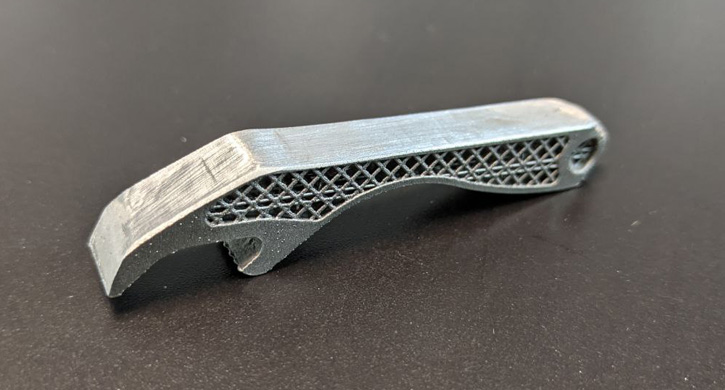
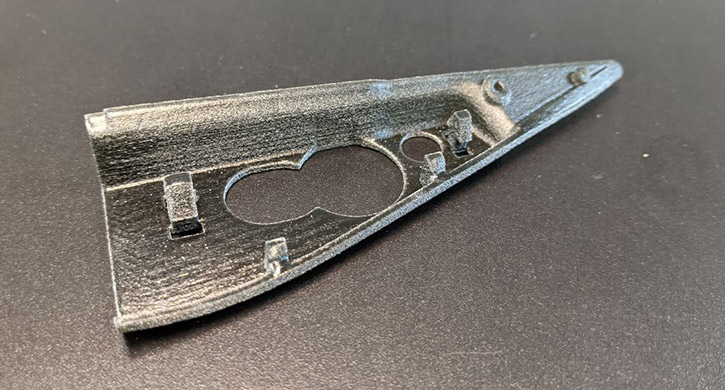
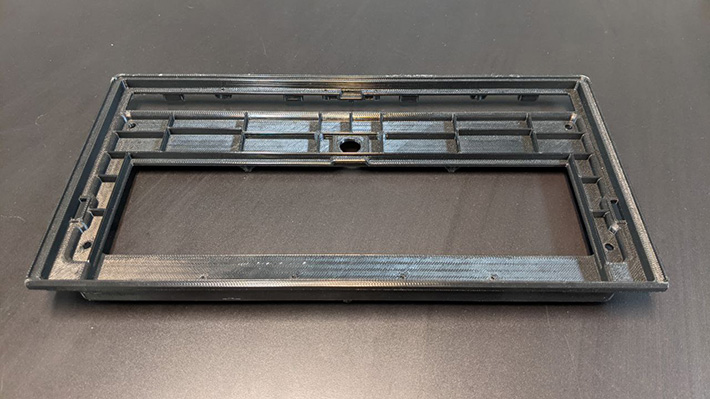
Every material and process comes with advantages and disadvantages, depending on what is important to you. If you are after a beautiful cosmetic part or model that is highly accurate, you might want to consider SLA (stereolithography) or PolyJet 3D Printing, as these processes have some of the smallest layers able to reproduce very fine details and tight tolerances. However, due to the nature of these processes, these materials are not the most durable so if you are more interested in a strong and rigid product you might want to sacrifice some of the aesthetic in favor of a stronger product such as SLS (Selective Laser Sintering), FDM (Fused Deposition Modeling) or DMLS (Direct Metal Laser Sintering). FDM allows for a range of different layer heights from 0.005” to 0.013”, which allows you to select just how coarse or detailed you would like your model to be. The thicker the layers, the faster the build is, which in turn yields a more affordable product. DMLS on the other hand produces precise high-quality metal parts with layer heights of 0.0008” to 0.003”. If you are looking for low-volume complex metal components that traditional CNC machining struggles with, DMLS 3D printing may be the solution you are looking for.
Certifications
Your project may require you to seek out 3D printing materials that offer certifications such as flame smoke and toxicity, chemical resistance, biocompatibility, sterilization capabilities, electrostatic discharge materials (ESD), or others. iDEAL Technology can provide the necessary documentation and ensure strict material and engineering requirements are met.
Final Thoughts
Picking the right materials and process takes research. To make things easy, our engineers can help guide you into the perfect process depending on your application and budget. With decades of experience designing and producing Rapid Prototypes, Studio Bucks, Functional Prototypes, Show-quality models, Fixture Aides, CNC machining and more, we are happy to answer any questions you may have. We use this experience to develop technology and services that help create the best and most accurate 3D printed prototypes in the industry. Our customers demand affordable, quality, on-time prototypes and iDEAL is exceeding these expectations every day. iDEAL Technology is located in Shelby Twp. Michigan. We have been helping our customers grow their business for over 35 years! Contact our experienced engineers to learn how we can help your business today.